
Quality Takes a Team – Lessons from the GSP Runway
Quality Takes a Team – Lessons from the GSP Runway
By Cliff Selkinghaus, SCAPA Technical Director – September 13, 2026
|
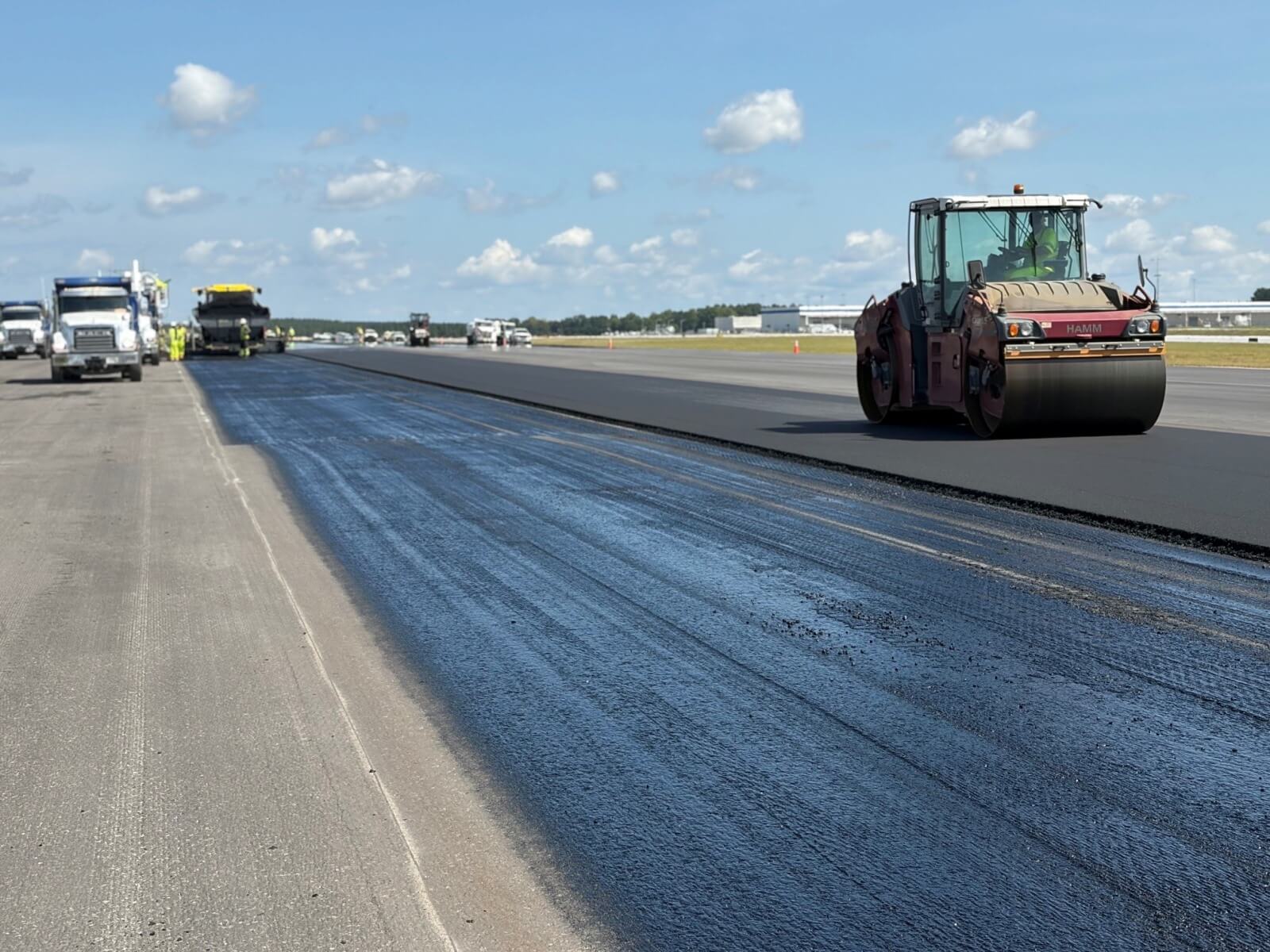
GSP runway rehabilitation underway. |
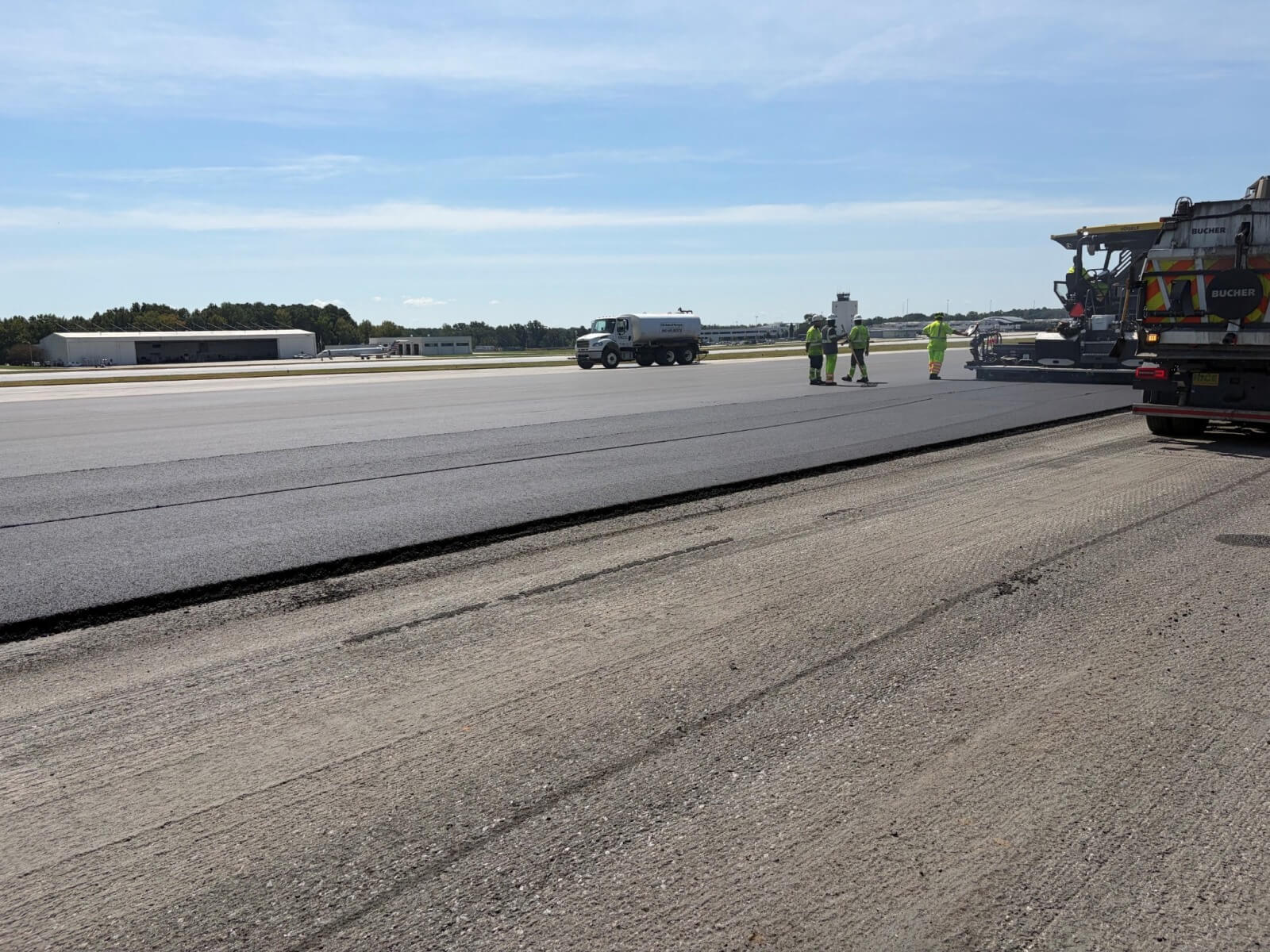
One of the things I enjoy most about getting out on projects is seeing our industry work together to solve challenges and produce quality asphalt. I recently had the opportunity to spend time at the Greenville-Spartanburg International Airport (GSP) during a major runway rehabilitation project. This project is a perfect example of something we talk about often at SCAPA: Quality asphalt comes from everyone on site doing their part and working together toward a common goal.
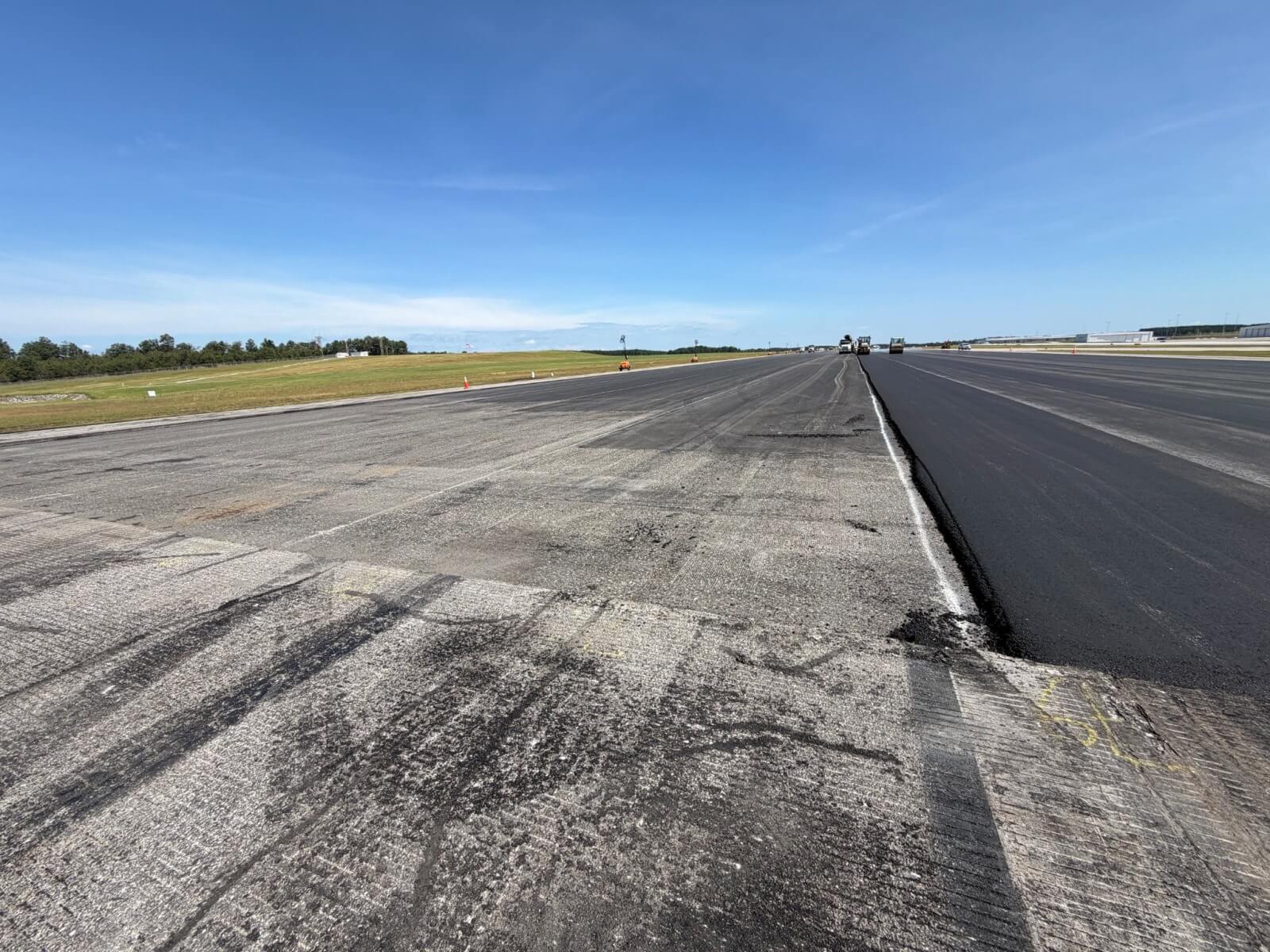
The GSP latest project presented a unique challenge for Lagan US (Prime Contractor). The airport’s primary (only) runway is approximately 150 feet wide and 7,200 feet long with HMA, and the schedule requires that the work be completed within extremely tight closure window. Deeper asphalt repairs for strengthening the structure were done first leaving a terrific opportunity to place a consistent 3” of FAA P-401 asphalt across the entire surface that are scoped to be completed during two long weekend closures. These closures are set to run between Friday evening and reopened for business by 6:00 a.m. Monday morning. This proved to be difficult in the summer months in SC where rain is usually predicted or is highly likely about every afternoon-evening in late summer. This weekend certainly did not come without those unwanted disruptions as several rain events occurred causing more delays and time needed for brooming and for the existing pavement surface to dry prior to paving! Anyone at home or present during the two most watched footballs games in SC at Clemson and in Columbia saw how bad the weather got Saturday night across SC prior to my visit to Greenville on Sunday morning!
This type of schedule leaves truly little room for error.
|
Milled existing runway surface ahead of asphalt placement. |
South Carolina Asphalt Pavement Association - 60 Years |

Quality Starts at the Plant
Reeves Construction’s Duncan plant and Rogers Group’s Greer plant were both called upon to supply asphalt for the project. These are competing producers, but on this project, the objective was bigger than any one company: produce consistent, high-quality asphalt and keep the paving operation moving. Both plants operated day and night, maintaining production rates exceeding 200 tons per hour to provide a continuous supply of material to the paving crews. Backup plants and additional raw materials were also planned in advance so that a mechanical problem or unexpected issue would not jeopardize the runway reopening.
That preparation matters and it begins with good materials, good mix designs, calibrated equipment, knowledgeable plant personnel, and QC technicians paying attention to what the numbers are telling them to produce good asphalt mix.
Keep the mix flowing to the site.
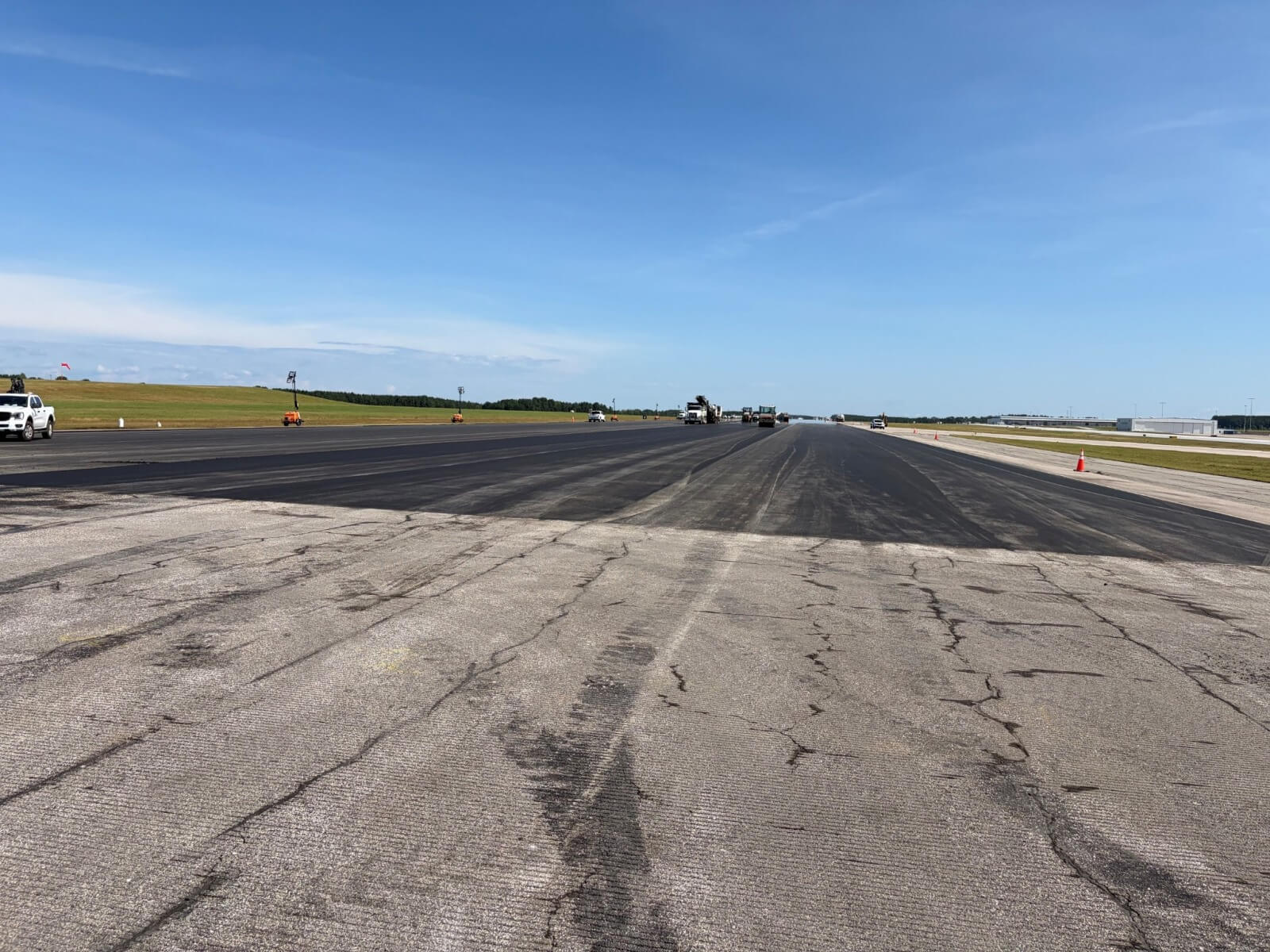
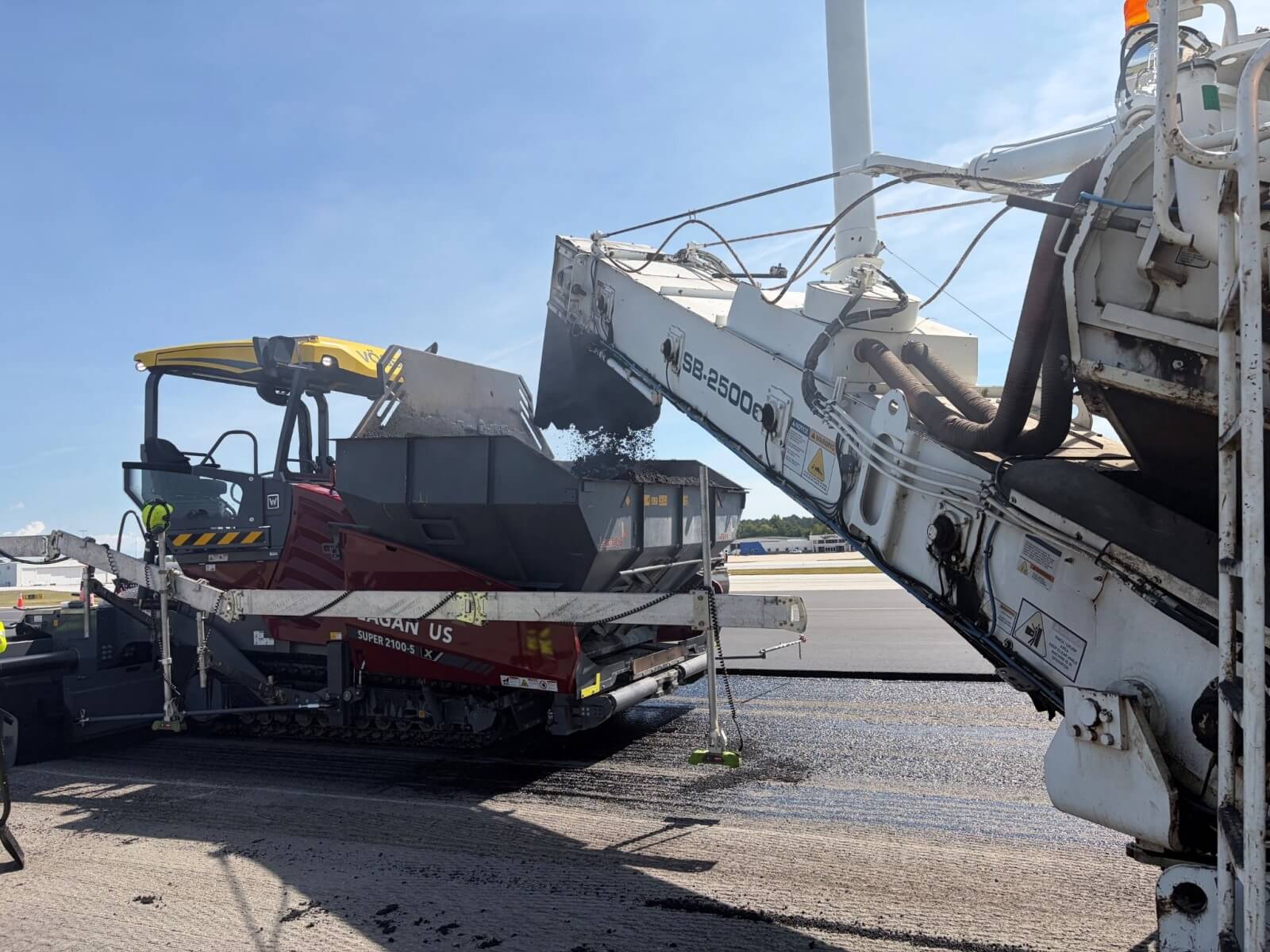
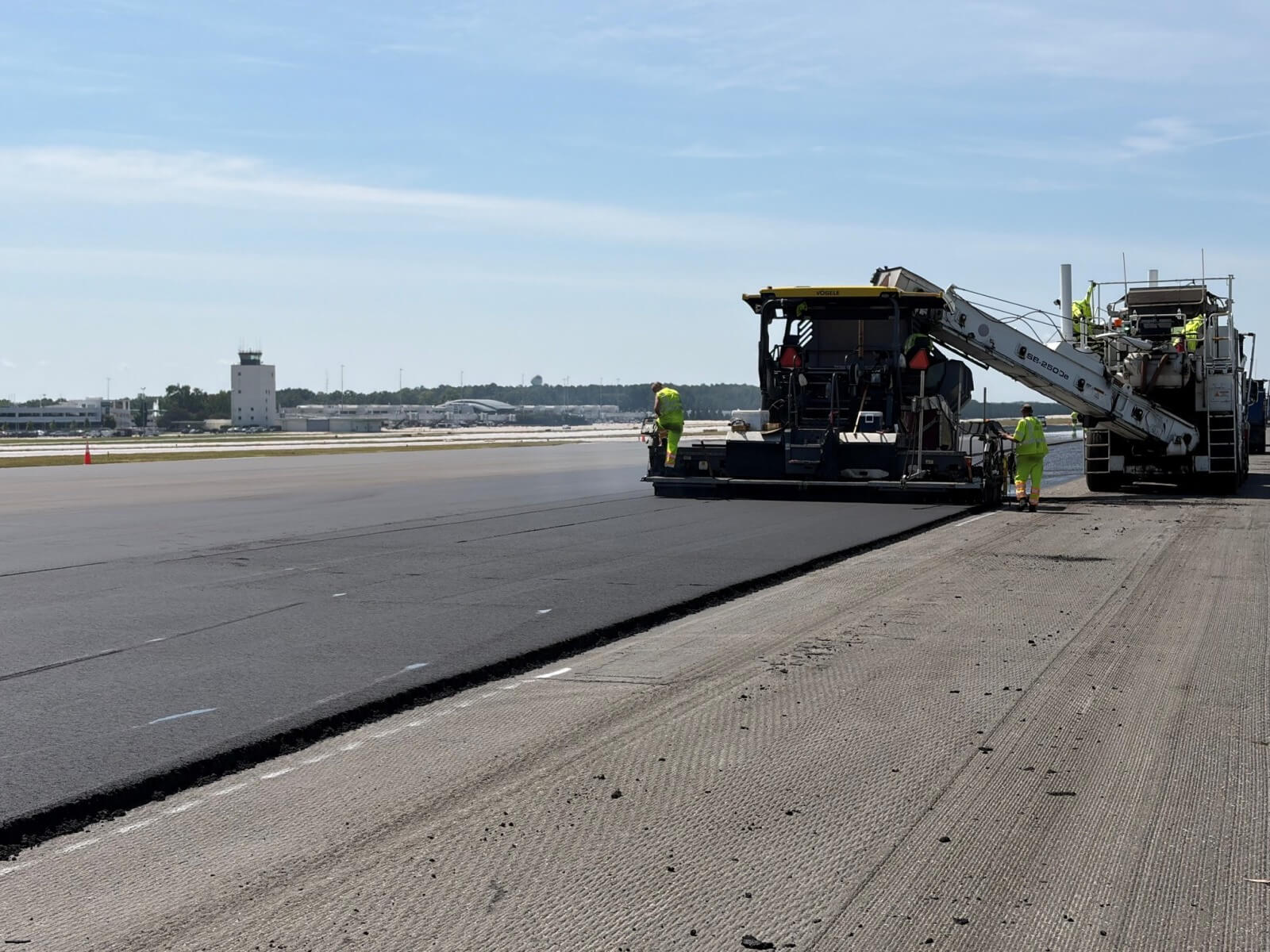
Once good mix leaves the plant, the responsibility for quality continues with trucking, paving, and compaction. A full truckload only last approximately 57 feet before another truck is needed when paving an average of 19 feet wide with each pull. The runway provided enough working space to utilize wide paving pulls and echelon paving which requires two pavers operating together so adjacent lanes can be placed while the asphalt remains hot. This creates an excellent opportunity to construct a dense, seamless longitudinal joint.
|
Echelon paving supports hot-to-hot joint construction. |
Continuous paving operations on the GSP runway. |
Anyone who has worked around asphalt knows how important joints are to long-term pavement performance. A good longitudinal joint requires much more than simply putting two paving lanes beside each other. It requires coordination between the paver operators, truck drivers, screed operators, QC personnel, roller operators, and everyone managing the paving operation.
|
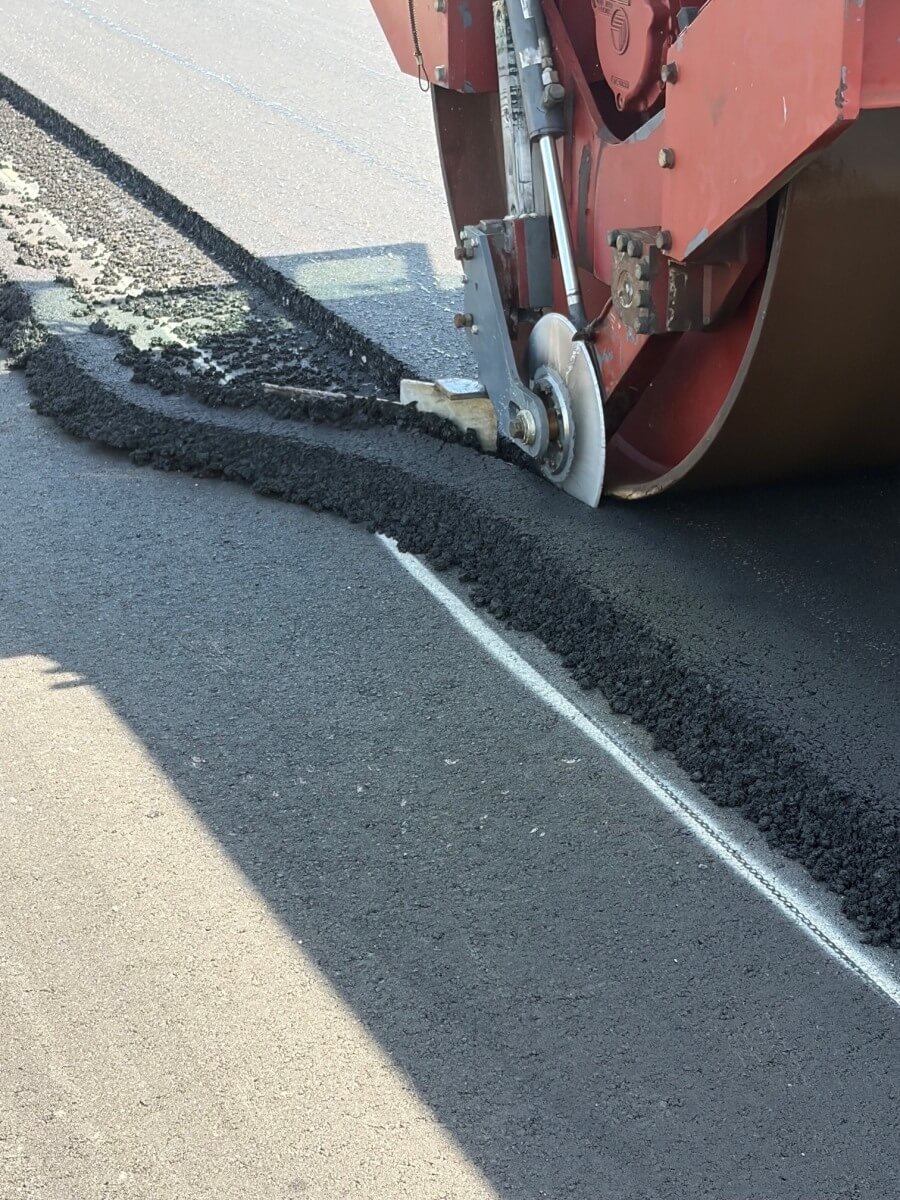
The project also required the longitudinal joints to be vertically cut and prepared before the adjacent paving lane was matched. That meant the paving and joint preparation operations had to remain carefully coordinated while still maintaining production. Runway paving and longitudinal joint construction. |
Vertical cutting of the longitudinal joint prior to matching the adjacent lane. |
Compaction is part of the mix.
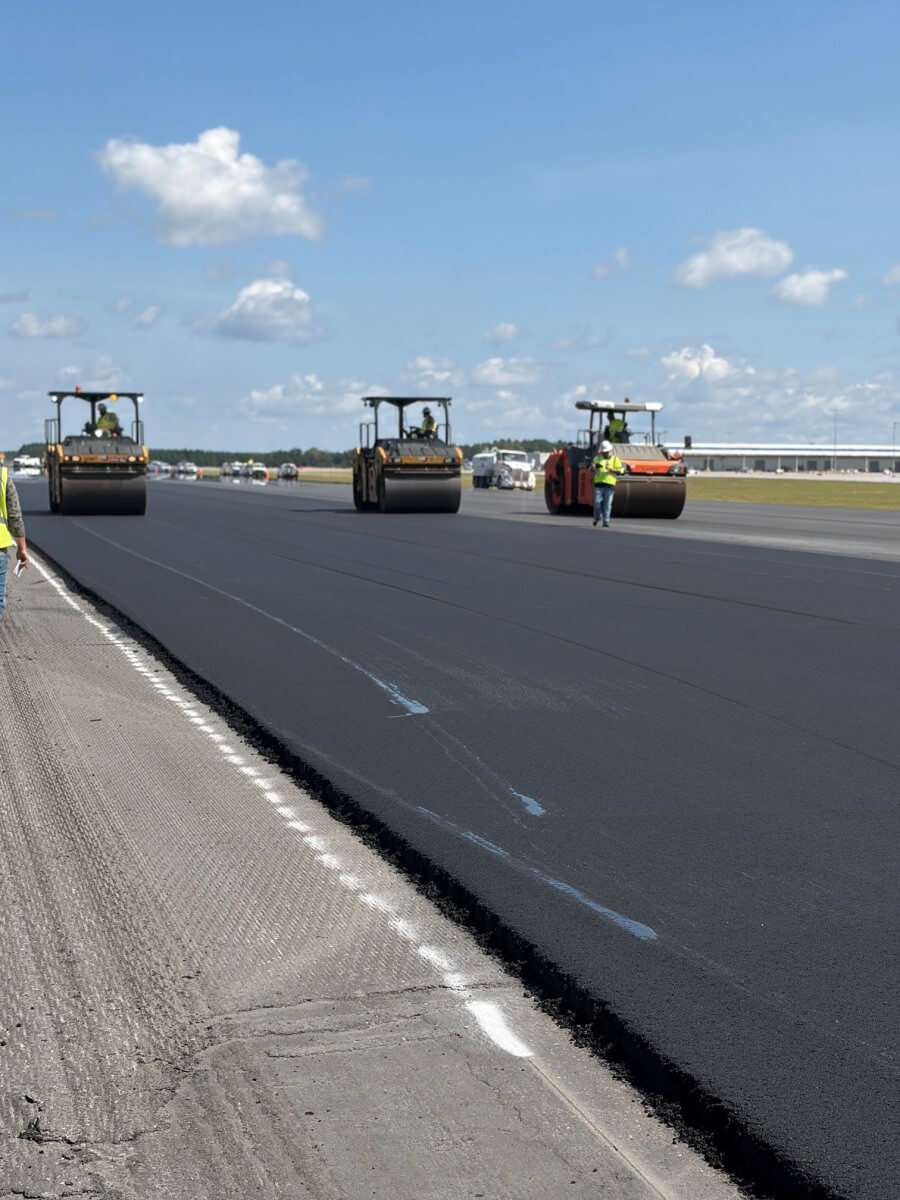
The same teamwork applies to compaction. The best mix design in the world cannot provide its intended performance if we do not properly place and compact it. Roller operators have a tremendous influence on the finished pavement. Maintaining the proper roller pattern, staying close enough to the paver to work within the appropriate temperature range, and communicating with the paving crew are all essential.
On a project moving this quickly, everyone must understand that their operation affects the person working immediately behind them. Plant production affects trucking, trucking affects the paver, the paver affects the rollers, compaction affects density, joint construction affects long-term durability and overall safety. And all of it affects the final pavement our industry puts its name on every day.
|
Paving tied to the prepared longitudinal joint. |
Coordinated compaction keeps the roller train close to the paving operation. |
One Common Goal
What impressed me most at GSP was not simply the amount of asphalt being produced or how quickly the work was being completed. It was seeing different companies and various parts of our industry working together.
Reeves and Rogers supplied the asphalt mix for Lagan Construction that managed the overall construction operation and placement operations as the prime contractor. Satterfield Construction even provided several roller operators, while N.W. White supported trucking, and engineering and QC/QA personnel worked alongside the construction teams. Everyone had a different responsibility, but everyone was working toward the same goal: Build a high-quality pavement and get the runway safely reopened on schedule. SCAPA spent time at both asphalt plants supplying the project and seeing that the QC/QA results were tracked, and the mixes were maintained within the required PWL specifications by FAA.
Most importantly, it comes from communication and people willing to work together. Whether we are paving an interstate, a secondary road, a parking lot, or one of South Carolina's busiest airport runways, the goal should be the same. Continue to work together and communicate with each other and take pride in the pavement we leave behind each day.
Cliff Selkinghaus
SCAPA Technical Director